
04 / 10
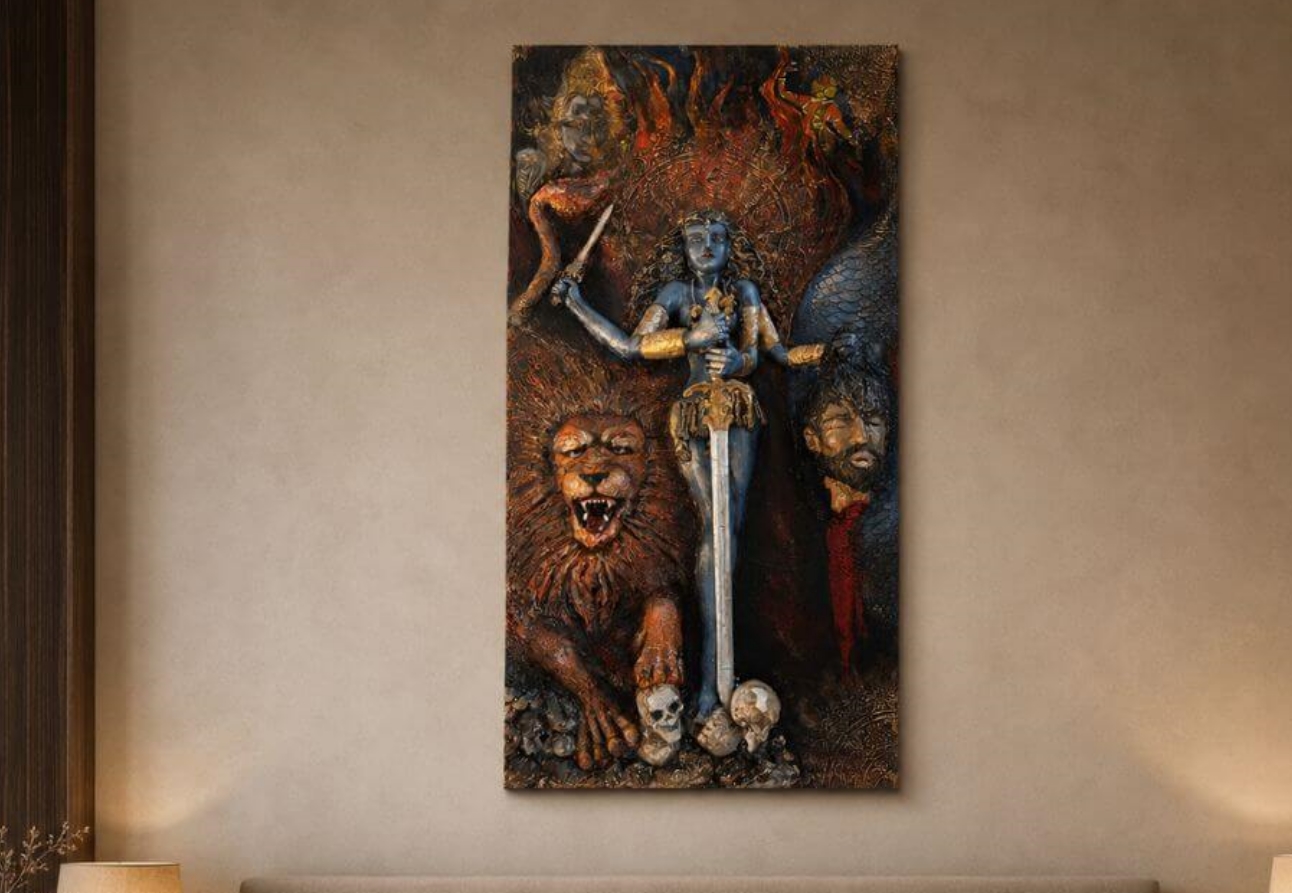
Kali – The Liberation
Look at Kali.
Many see strength in her. Many – danger. Some – destruction.
Yet almost no one notices what is essential.
Kali never destroys the human being.
She destroys only that which a person keeps holding on to, though it long ago ceased to be a part of their life.
Consider for a moment …
How many things do we carry within us for years?
Words spoken once in childhood. Failures long since past. Wounds to which there is no return. Feelings of guilt. The fear of taking the first step.
We call this memory.
Yet sometimes it becomes a cage.
There is a quiet question almost no one asks themselves:
If I lay down this fear … who will I be then?
If I let go of this pain …
What remains?
Sometimes a person says:
"I cannot let go."
But perhaps the truth sounds different.
They are afraid to discover who they will be without all of it.
Look at Kali once more.
In her hands lies no anger. There is resolve in them.
She knows what is so hard for a person to accept.
One cannot step into a new life while still dwelling within the old story about oneself.
That is precisely why liberation almost always feels like loss.
But time passes.
And one day a person looks back.
And understands, all at once …
They did not lose themselves.
They only lost what had long prevented them from remembering who they are.
Perhaps today, beside this work, you wish to let go of nothing at all.
And that too is right.
One cannot force oneself to be ready.
But if one day this image rises again in your memory …
Do not hurry.
Perhaps that is precisely when the moment comes in which you yourself wish to open your hands.
And then, in the place once held by fear, something far quieter takes its place.
Freedom.
Do not try to let go today.
When a person is ready, what is superfluous falls away of its own accord.
And then it becomes easier to remember what has always lived within.
Many see strength in her. Many – danger. Some – destruction.
Yet almost no one notices what is essential.
Kali never destroys the human being.
She destroys only that which a person keeps holding on to, though it long ago ceased to be a part of their life.
Consider for a moment …
How many things do we carry within us for years?
Words spoken once in childhood. Failures long since past. Wounds to which there is no return. Feelings of guilt. The fear of taking the first step.
We call this memory.
Yet sometimes it becomes a cage.
There is a quiet question almost no one asks themselves:
If I lay down this fear … who will I be then?
If I let go of this pain …
What remains?
Sometimes a person says:
"I cannot let go."
But perhaps the truth sounds different.
They are afraid to discover who they will be without all of it.
Look at Kali once more.
In her hands lies no anger. There is resolve in them.
She knows what is so hard for a person to accept.
One cannot step into a new life while still dwelling within the old story about oneself.
That is precisely why liberation almost always feels like loss.
But time passes.
And one day a person looks back.
And understands, all at once …
They did not lose themselves.
They only lost what had long prevented them from remembering who they are.
Perhaps today, beside this work, you wish to let go of nothing at all.
And that too is right.
One cannot force oneself to be ready.
But if one day this image rises again in your memory …
Do not hurry.
Perhaps that is precisely when the moment comes in which you yourself wish to open your hands.
And then, in the place once held by fear, something far quieter takes its place.
Freedom.
Do not try to let go today.
When a person is ready, what is superfluous falls away of its own accord.
And then it becomes easier to remember what has always lived within.